
Grounding mats – your direct line to the Earth’s rejuvenating energy, right in your own home.
But here’s a question that might be running through your mind: Does your skin actually have to touch the grounding mat for it to work its magic?
Let’s dig into the details and find out if bare skin is a must or if you can stay grounded with a bit of a buffer.
Direct Skin Contact: The Best Connection

Let’s start with the ideal scenario. Direct skin contact with your grounding mat is the gold standard. When your skin touches the mat, the transfer of the Earth’s electrons happens efficiently and effectively.
It’s like having a clear, direct signal with no interference. This direct contact ensures you get the maximum grounding benefits, from reducing inflammation to improving sleep.
The Science of Skin Contact
The surface of your skin is naturally conductive, meaning it allows electrons to flow easily.
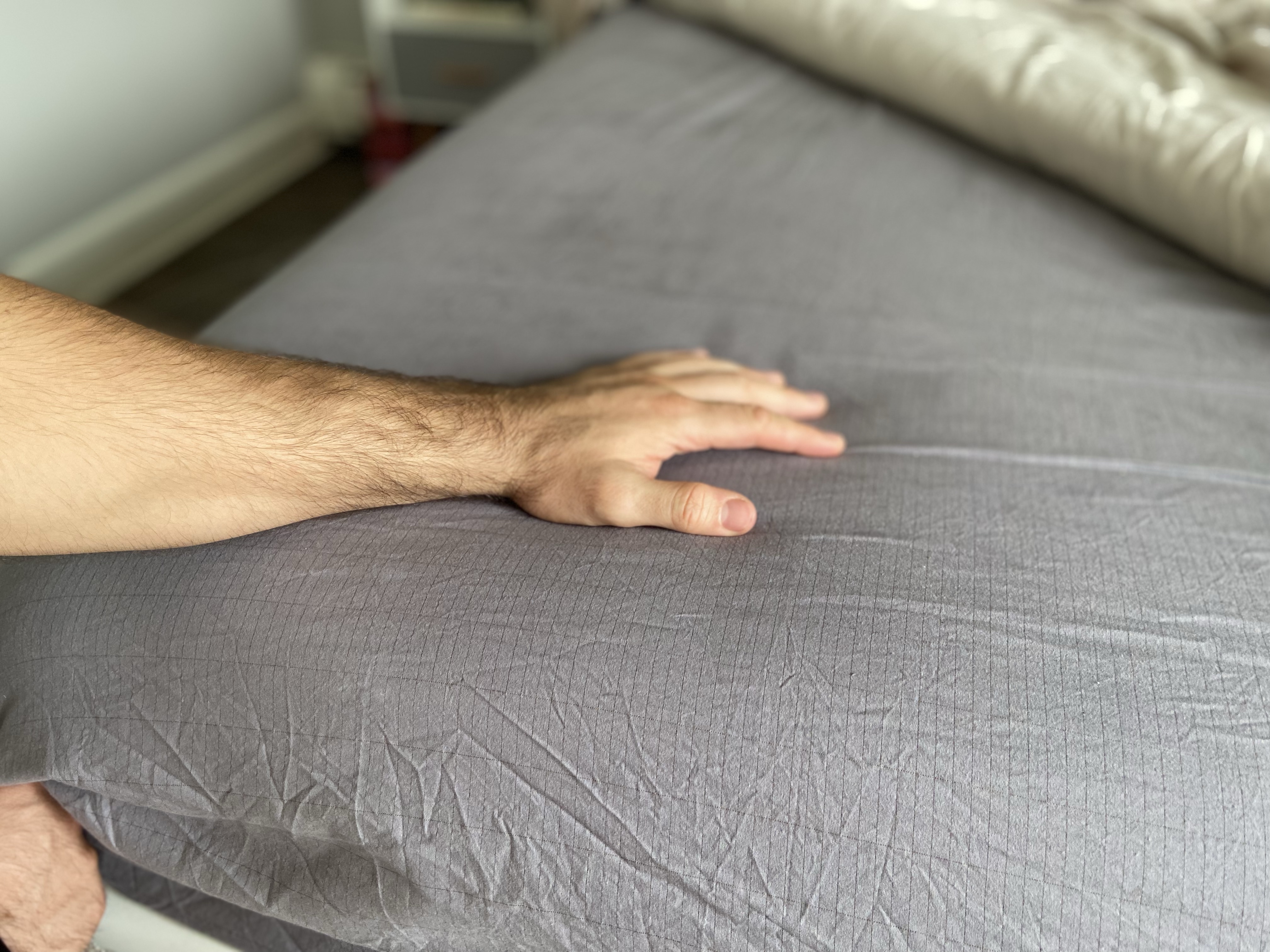
When you place your bare skin on a grounding mat or sheets, you’re creating an optimal pathway for the Earth’s electrons to enter your body.
This immediate connection helps neutralize free radicals, balance your body’s electrical charge, and promote overall wellness and the health benefits everyone seeks.
Staying Grounded With Clothes?

What if you’re not keen on going barefoot or laying bare-skinned on the mat?
Can you still benefit from grounding if there’s a layer of clothing in between?
The answer is yes – but with some caveats.
The Type of Fabric Matters…
Clothing made from natural fibers like cotton, linen, and wool can still allow for some grounding benefits.

These materials are relatively good conductors and won’t block the flow of electrons entirely. So, if you’re wearing natural fiber socks or lying on the mat with a cotton shirt, you can still experience some grounding effects.
However, synthetic fabrics like polyester, nylon, and acrylic are poor conductors. These materials can act as barriers, significantly reducing the effectiveness of the grounding mat.

If you’re decked out in synthetic fibers, you might be blocking most of the grounding benefits.
Tips for Effective Grounding
- Bare Skin for the Win: Whenever possible, aim for direct skin contact with your grounding mat. This is the most effective way to absorb the Earth’s energy and reap all the health benefits.
- Natural Fibers Are Your Friends: If you prefer a bit of a buffer, choose clothing made from natural fibers. Cotton, linen, and wool allow for better conductivity than synthetic materials.
- Expose Some Skin: Even if you’re mostly clothed, try to expose some skin to the grounding mat/sheets. As long as just a little part of skin is touching your grounding device, you’ll gain the benefits of earthing.
The Final Word

While direct skin contact is the best way to maximize the benefits of your grounding mat, you can still experience some grounding effects through natural fiber clothing.
The key is to minimize barriers and ensure as much direct contact as possible.
Wrapping It Up
So, does your skin have to touch the grounding mat?
Ideally, yes.
Direct skin contact provides the clearest, most effective connection to the Earth’s energy.
However, natural fiber clothing can still allow for some benefits if you’re not comfortable going bare-skinned. Keep the barriers minimal, embrace the connection, and let the grounding magic happen.
Happy grounding!


Leave a Reply