
Quick Answer:
Grounding sheets work by connecting your skin to the Earth through conductive fibers woven into the fabric. A cord connects the sheet to a properly grounded outlet’s ground port, creating an electrical connection without powering the sheet like an electric blanket. This connection helps bring your body’s electrical potential closer to that of the Earth. Whether it reliably improves sleep, pain, or inflammation is a separate question: early studies suggest possible benefits, but clinical evidence remains limited.
A grounding sheet’s electrical connection depends on three components:
- Conductive fabric
- Compatible cord
- Properly grounded outlet.
Below, we explain how they work together, what changes electrically when you touch the sheet, and what research says about possible health benefits.
What Are Grounding Sheets Made Of?
Grounding sheets combine a base fabric with conductive fibers. The base fabric such as cotton or bamboo-derived viscose, provides the sleeping surface, while conductive materials, such as silver threads, create an electrical pathway through the sheet.

The materials and fiber percentages vary by manufacturer, so check the specifications for the sheet you’re considering.
A connection point, often a metal snap, attaches the conductive fabric to a compatible grounding cord. A regular bedsheet lacks this conductive pathway and connection point.
How Does the Sheet Connect to the Ground?
A grounding sheet connects to the Earth through three components: the conductive fabric, a compatible grounding cord, and a properly grounded electrical outlet.


One end of the cord attaches to the sheet’s connection point. The other connects to the outlet’s ground port, which is linked through the building’s grounding system to the Earth. When your bare skin touches the conductive fabric, your body becomes part of that electrical connection.
The sheet is not powered like an electric blanket. A correctly designed grounding connector uses the outlet’s ground connection rather than its live and neutral contacts. It does not use household power to heat the fabric.
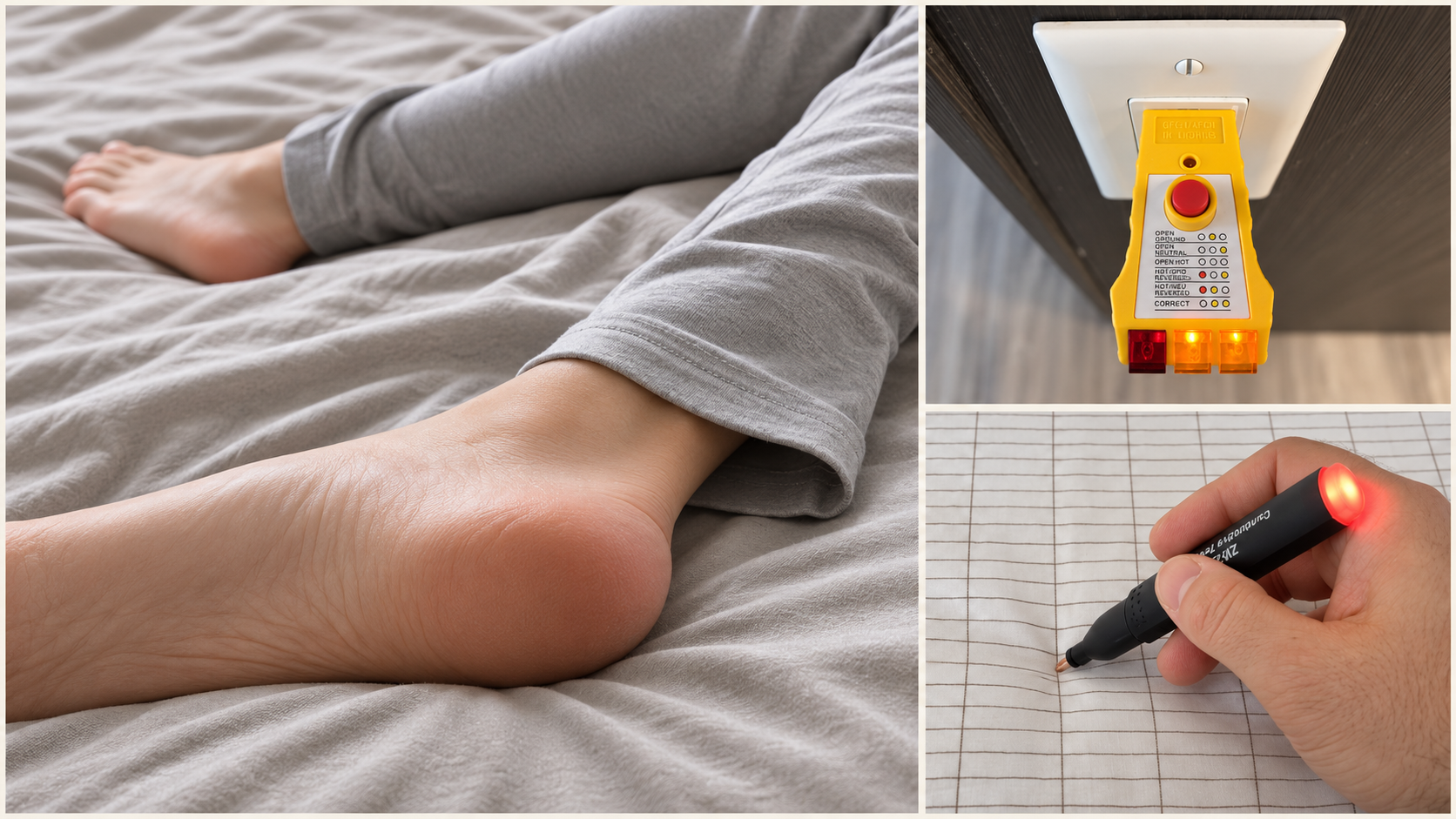
Follow the manufacturer’s setup instructions and use the specified cord. A three-prong outlet alone does not confirm a working ground connection; if the wiring or grounding is uncertain, have a qualified electrician check it.
The conductive materials (silver or carbon) are crucial as they act as the medium through which the Earth’s electrons can be transferred to the body.
What Changes Electrically When You Use a Grounding Sheet?
Grounding connects your body to the Earth’s electrical reference potential. Electrical potential describes voltage relative to a reference point. In this case, the ground.
Your body can accumulate static charge and pick up small alternating voltages from nearby electrical wiring and devices. When your skin touches a properly connected grounding sheet, the conductive pathway allows charge to redistribute, bringing your body’s potential closer to ground potential.

This can reduce the voltage measured between your body and ground. The reading depends on the surrounding electrical environment, your contact with the sheet, and the measurement setup.
A lower voltage reading demonstrates an electrical change, not a proven health benefit. It does not show that your body is receiving a continuous therapeutic supply of electrons, or that inflammation, cortisol, or sleep quality has improved. Those effects require separate clinical evidence.
Does That Electrical Connection Produce Health Benefits?
An electrical connection to the ground does not, by itself, establish a health benefit. Researchers have investigated whether grounding during sleep affects sleep quality, cortisol, pain, and stress. Some studies report encouraging results, but the evidence remains preliminary.

The studies below tested different products and populations. Findings from a grounding mat or conductive mattress pad should not automatically be applied to every grounding sheet.
| Study | Participants & Product | Reported Findings | Key Limitations |
|---|---|---|---|
| Cortisol & sleep 2004 · 8 weeks | 12 participants with sleep, pain, and stress complaints used conductive mattress pads during sleep. | Changes in cortisol patterns and improvements in self-reported sleep, pain, and stress. | Very small sample and no separate placebo-control group. Cannot establish that grounding caused the changes. |
| Sleep in mild Alzheimer’s disease 2022 · 12 weeks | 22 enrolled; 15 completed. Participants with mild Alzheimer’s disease used grounding or sham-grounding mats. | Better questionnaire-based sleep scores versus the sham group. No significant differences in anxiety or depression. | Small sample, participant dropout, and a specific patient population limit how broadly the results apply. |
| Grounding mats & sleep 2025 · 31 days | 60 participants randomly assigned to grounding or non-grounding mats for six hours daily. | Increased monitor-measured sleep time versus controls, plus improvements in several questionnaire scores compared with baseline. | Relatively small, short pilot trial using mats. Larger, longer studies are needed to establish lasting benefits and applicability to grounding sheets. |
What does this mean for grounding sheets? Early research suggests possible sleep benefits, but it does not establish that grounding sheets reliably improve sleep, reduce inflammation, or accelerate healing. A conductivity test can check an electrical connection; it cannot verify those health effects.
Conclusion
Grounding sheets use conductive fabric and a grounding cord to connect your body to the Earth through a properly grounded outlet.
This connection can bring your body’s electrical potential closer to ground potential, but that measurable electrical change does not establish a health benefit.
Early studies suggest possible improvements in sleep, although the evidence remains limited and findings from grounding mats or mattress pads may not apply to every sheet. If you choose to try one, follow the manufacturer’s setup instructions and keep your expectations grounded in what the research actually shows.
The essentials
Grounding sheet FAQs
Do grounding sheets use electricity?
Grounding sheets do not use household power like an electric blanket. A compatible grounding cord connects the conductive fabric to a properly grounded outlet’s ground port, rather than its live or neutral contacts.
Do grounding sheets need bare-skin contact?
Bare-skin contact with the conductive fabric provides the most direct electrical connection. Dry, nonconductive clothing or an ordinary sheet between your skin and the grounding sheet can interrupt that connection. Follow the product’s contact and placement instructions.
How do you know if a grounding sheet is connected?
Use a compatible grounding-product tester according to the manufacturer’s instructions to check the sheet and cord. An outlet tester can identify some wiring faults but cannot guarantee electrical safety. A connection test does not demonstrate health benefits.
Is there scientific evidence that grounding sheets work?
Small studies of grounding mats and conductive mattress pads have reported possible sleep benefits. However, clinical evidence remains limited, and those findings do not establish that every grounding sheet improves sleep, reduces inflammation, or relieves pain. See the research table above for study sizes and limitations.


Leave a Reply